What if we told you that in just 480 seconds, your electric vehicle can boost its battery from 20% to 80%?
This is not a sci-fi future—it’s the "6C Instant Charging" technological revolution already realized by CNAE Sodium Energy.
When 480-second fast charging becomes standard for low-speed electric vehicles, it’s not just a technological iteration, but an energy revolution about "time sovereignty".
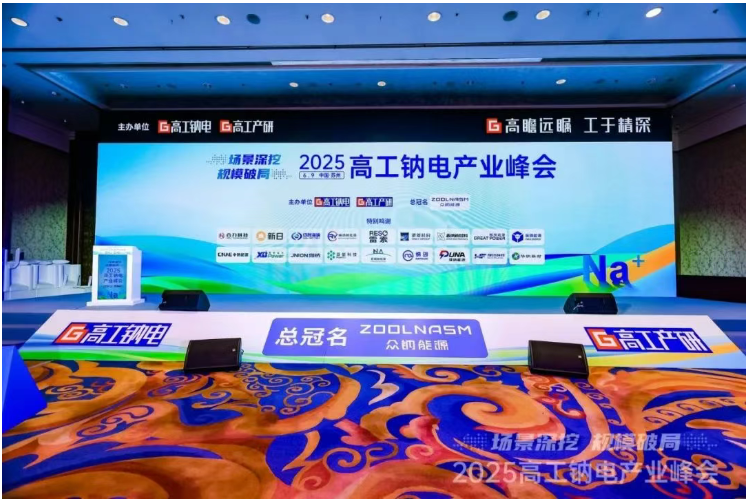
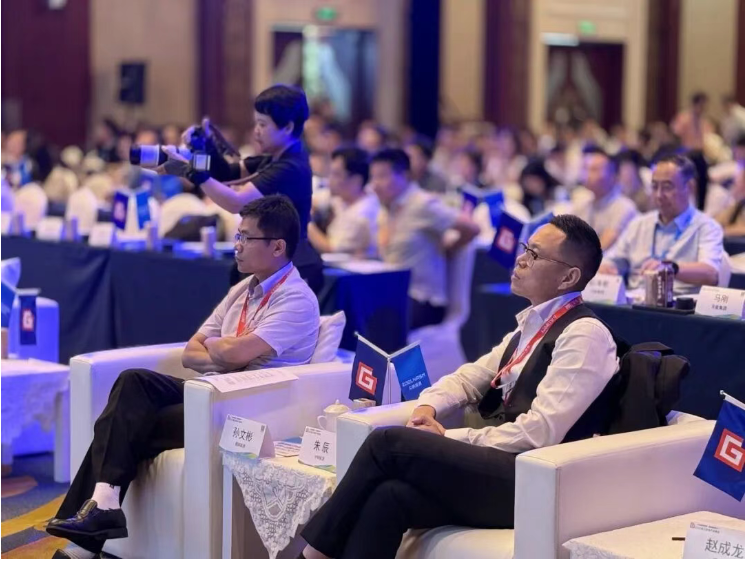
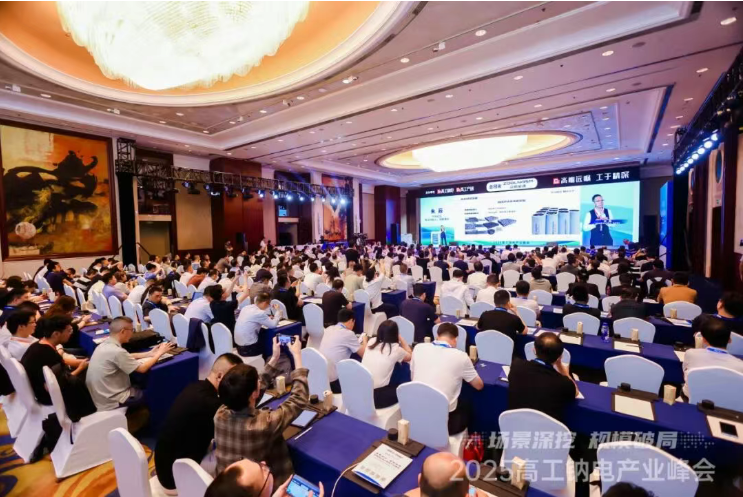
Hosted by GGII (Gaogong Industry Research Institute), a leading Chinese think tank, the GGII Sodium-Ion Battery Summit is widely recognized as the "core driver of sodium-ion battery industrialization". The 2025 summit attracted over 100 leading enterprises in the industrial chain, including CATL, CNAE China Sodium-Ion Battery Group, and Zhongke Haina, all gathering to discuss technical routes and ecological construction.
At the summit, Mr. Zhu Chen, co-founder and vice chairman of CNAE Sodium Energy, was invited to deliver a keynote speech titled "6C Sodium-Ion Batteries Reconstruct the Battery Swap Ecosystem for Food Delivery and Courier Services", which received enthusiastic applause.
From CNAE’s development process to the brand’s technical advantages and future directions, the speech naturally led to the core theme of "6C Instant Charging Shapes the Future of Sodium-Ion Batteries".
In just ten minutes, the on-site audience witnessed the pioneering spirit of "persistently breaking through itself" of CNAE—one of China’s Top 3 sodium-ion battery enterprises—on its R&D and production journey!
2. Five Core Features and Three Development Directions of CNAE Sodium-Ion Batteries
(1) Five Core Features of Sodium-Ion Batteries
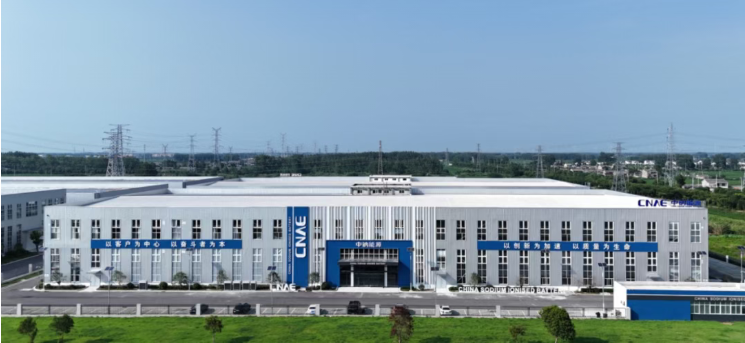
Born from the CNAE Laboratory in the UK, CNAE Sodium Energy has spent ten years refining its craft. Through its trinity model of "UK Think Tank + Shenzhen Commercialization + Yangzhou Smart Manufacturing", it has transformed laboratory sodium-ion battery technology into industrial power. The fully automated production lines at the Yangzhou base, with an annual output of 1GWh full-tab large cylindrical cells and 5GWh modules, provide strong support for innovation.
A new green and efficient energy choice—sodium-ion batteries boast five core features, offering a new direction for energy transition:
Eco-Friendly & Resource-Rich: Sodium is abundant in the Earth’s crust, 423 times more than lithium. With low-pollution production and easy recyclability, it significantly reduces resource dependence and environmental pressure, promoting the sustainable development of green energy.
High Safety: Sodium-ion batteries are not prone to oxygen evolution or sodium dendrite formation, with a low self-discharge rate. Even in cases of needle penetration, extrusion, or short circuit, they will not burn, effectively solving battery safety issues.
Ultra-Fast Charging: Achieving 6C high rate, it can be fully charged and discharged in 8 minutes, with 10,000 cycles without sodium dendrite formation. After large-scale commercialization, it can greatly alleviate range anxiety.
Ultra-Wide Temperature Range: Operating temperature ranges from -40℃ to 80℃, maintaining good capacity in both high and low-temperature environments. Suitable for various scenarios such as cold-region energy storage and automotive start-stop power supplies.
Cost Advantage: Raw material prices for sodium-ion batteries are stable, with a manufacturing cost 30%-40% lower than lithium-ion batteries, offering a significant cost advantage.
(2) Three Development Directions of CNAE
Adhering to a customer-value-oriented development philosophy, CNAE leverages its full-industry-chain advantages to integrate cell, BMS, and PACK technologies, creating high-performance energy storage and power products, and continuously driving technological innovation in the new energy field. The company layouts globally, actively promoting the industrialization of sodium-ion batteries and contributing to global energy transition.
Based on the above principles, CNAE Sodium Energy has identified three development directions:
Power and Energy Storage Sodium-Ion Cells: Focus on high energy density and long cycle life, optimize material formulas, break through the energy density of 160-200Wh/kg, innovate processes to reduce costs, achieve large-scale mass production, and meet power and energy storage needs.
Light-Duty Power Application Solutions: Centered on sodium-ion battery technology, provide high-safety, wide-temperature adaptability, and cost-effective energy solutions for electric bicycles, motorcycles, low-speed electric vehicles, AGVs, forklifts, RVs, and other scenarios.
Power Energy Storage Application Solutions: Customize sodium-ion battery energy storage systems for power grid, industrial and commercial, and household scenarios. Improve safety and economy through intelligent BMS management, supporting the construction of new power systems.
3. Breaking Through the Bottleneck! The Hardcore Technology Behind 480-Second 6C Instant Charging
"Fast charging is not a compromise that sacrifices lifespan, but a reconstruction of material genes." Targeting the two-wheel vehicle market, Mr. Zhu Chen pointed out that in 2024, the daily increment of two-wheel vehicles in Shenzhen, Guangzhou, and other cities exceeded 100,000 units. With the vigorous development of food delivery and courier services, endurance and energy supplementation have become key industry pain points.
CNAE has achieved systematic technological innovations in the following three processes:
Cathode Innovation: The 6C instant charging technology optimizes battery materials in depth. The cathode adopts a new type of polyanion NFPP material with a specific capacity >110 mAh/g. Under 6C rate, the capacity retention rate is >95% after 2,000 cycles, enhancing sodium ion transport. By screening different transition metal ions and adjusting the proportion of elemental components, the NFPP cathode material system and optimal chemical composition formula have been determined.
Anode Breakthrough: A special hard carbon material is selected for the anode to ensure stable charge-discharge structure and extend battery lifespan.
Process Refinement: Ultra-thin electrode design shortens ion transport paths; innovative electrolyte formula reduces internal resistance and improves ionic conductivity, creating conditions for the rapid migration of sodium ions.
Currently, 6C sodium-ion batteries can charge from 20% to 80% in 480 seconds, with a capacity retention rate of over 95% after 2,000 cycles under 6C high current.
Compared with the traditional battery swap model, 6C instant charging relies on the existing electric vehicle charging pile network, eliminating the need for fixed-point battery swapping with stronger compatibility, covering the civilian market. The construction cost is reduced by more than 60% compared with battery swap cabinets, and the single charging cost is ≤4 yuan, significantly superior to the battery swap cabinet’s monthly rental model of 350 yuan.
In the future, CNAE Sodium Energy will continue to optimize battery performance, improve the charging facility network, and expand to scenarios such as scenic spot tours and sanitation cleaning, working with industry peers to depict the commercial blueprint of sodium-ion batteries.